Hajj, the Islamic pilgrimage to Mecca
Hajj, one of the Five Pillars of Islam, is a significant religious pilgrimage that Muslims undertake to the holy city of Mecca in Saudi Arabia. It's mandatory for every financially and physically able Muslim to perform Hajj at least once in their lifetime. Here's an overview:
Timing: Hajj occurs annually during the Islamic lunar month of Dhu al-Hijjah, specifically from the 8th to the 12th day. It culminates in the festival of Eid al-Adha.
Rituals:
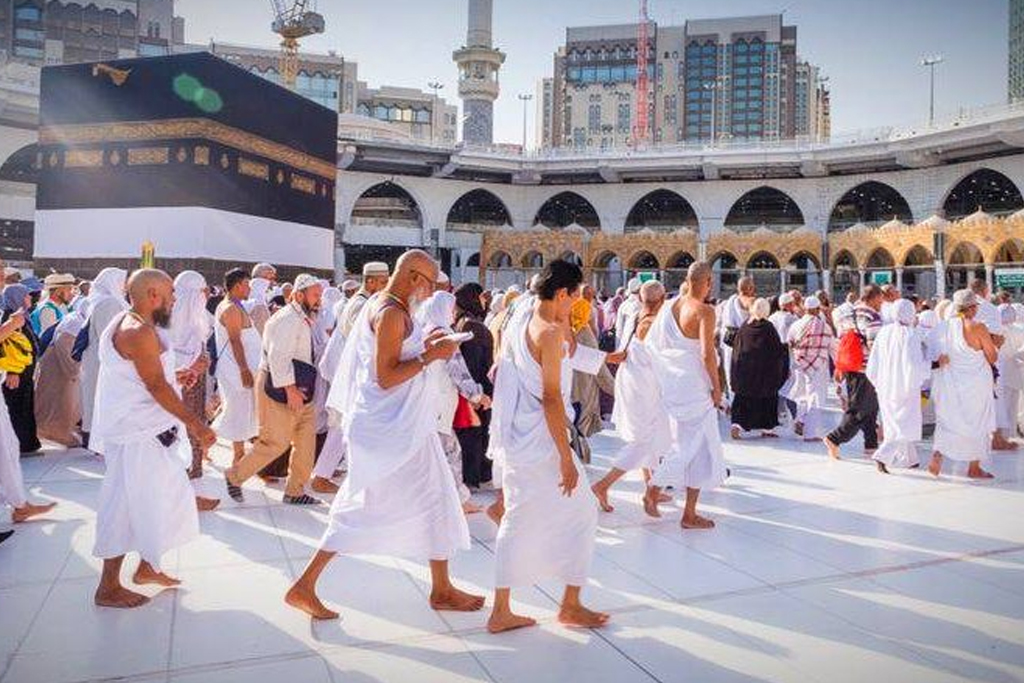
Ihram: Pilgrims enter a state of consecration called Ihram, symbolized by wearing simple white garments for men and specific modest attire for women. Ihram signifies purity and equality before God.
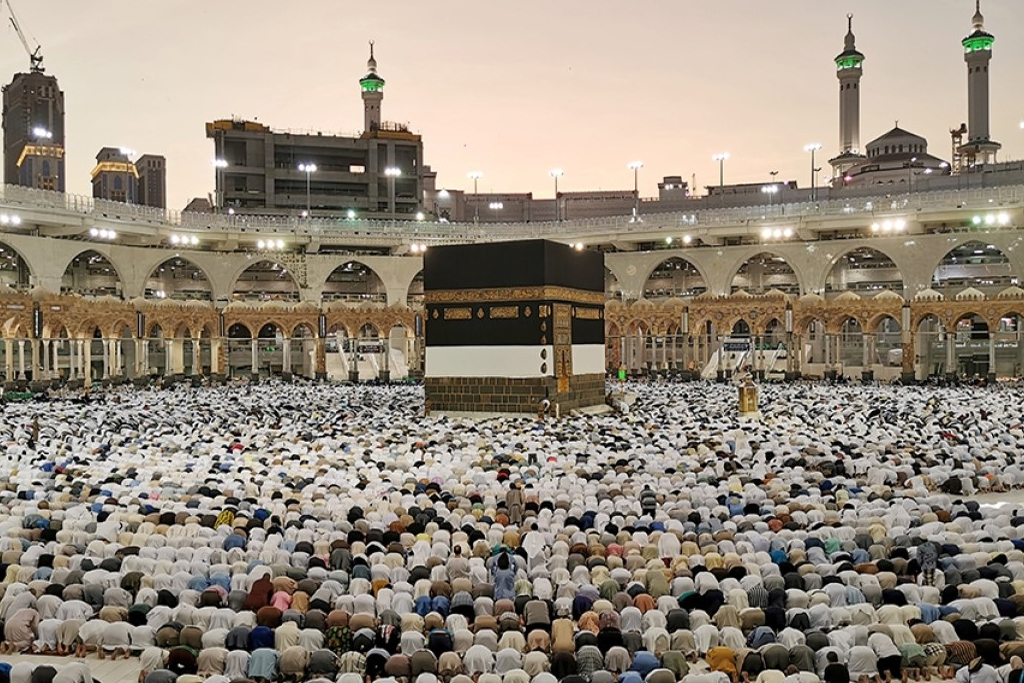
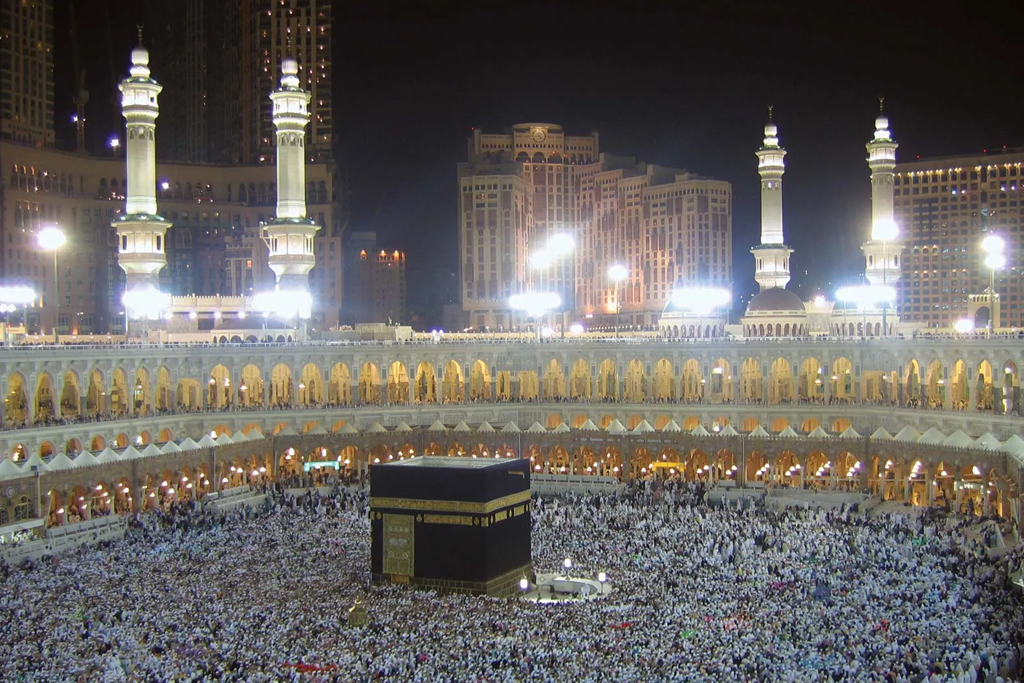
Tawaf: Upon arrival in Mecca, pilgrims perform Tawaf, circumambulating the Kaaba, the sacred cube-shaped structure at the center of the Masjid al-Haram.
Sa'i: Pilgrims then perform Sa'i, walking briskly seven times between the hills of Safa and Marwah, symbolizing Hagar's search for water for her son Ishmael.
Mount Arafat: The most crucial aspect of Hajj is the gathering at Mount Arafat on the 9th day. Here, pilgrims engage in supplication and reflection, seeking forgiveness and mercy from Allah.
Stoning of the Devil: After Arafat, pilgrims proceed to Mina and participate in the symbolic stoning of the Devil by throwing pebbles at three pillars.
Eid al-Adha: The Hajj culminates with the festival of Eid al-Adha, commemorating the willingness of Prophet Ibrahim (Abraham) to sacrifice his son Isma'il (Ishmael) as an act of obedience to God. Muslims worldwide also celebrate this festival by sacrificing animals and distributing meat to the needy.
Tawaf al-Ifadah: Pilgrims return to Mecca to perform Tawaf al-Ifadah, another circumambulation of the Kaaba,symbolizing spiritual rebirth.
Spiritual Significance: Hajj symbolizes the unity of the Muslim ummah (community) and commemorates the actions and sacrifices of Prophet Ibrahim and his family. It is a time for Muslims to seek forgiveness, purification, and spiritual renewal.
Global Participation: Hajj attracts millions of Muslims from around the world, making it one of the largest annual gatherings. The diversity of cultures and backgrounds among pilgrims underscores the universality of Islam.
Hajj holds immense spiritual significance for Muslims and is regarded as a journey of a lifetime, fostering a deep sense of community, devotion, and humility.